Catalog sections
Price:
–
There are materials that immediately demand attention. And there are those that quietly make everything around them feel more intentional. Taj Mahal Almond by Ascale belongs to the second category. This porcelain stoneware is not about visual impact for its own sake — it is about stability of perception, about creating a space that feels composed, balanced and confident.
Its almond-toned light palette does not function as “just a light colour”. Instead, it acts as a soft neutral environment where form, light and texture coexist without friction. Taj Mahal Almond does not compete with architecture — it reinforces it.
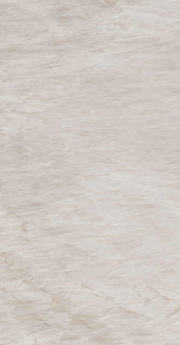
Many light surfaces share the same weakness: they become either cold and sterile, or visually flat. Taj Mahal Almond follows a different logic. Its surface recalls natural stone with internal depth and subtle variation — something that may not be obvious at first glance, but is clearly felt in the space.
The texture is not decorative, yet it has rhythm. In daylight, the material appears calm and grounded. Under warmer evening lighting, it gains softness and depth. This is not a background in the traditional sense — it is a surface that works with light, rather than simply reflecting it.
The Taj Mahal Almond collection is available in multiple formats, and this is what gives it real flexibility in projects. Large slabs allow for continuous, monolithic surfaces where floors and walls feel uninterrupted and cohesive.
Mid-size formats are useful in areas that require adaptability — transitions, niches, functional zones. The ability to combine formats within one collection turns the material into a design instrument, not a fixed solution imposed on the space.
In residential interiors, this porcelain stoneware acts as a stabiliser. It reduces visual noise, makes spaces feel brighter without becoming sterile. Furniture appears more defined, textiles warmer, wood deeper and richer.
In kitchens, Taj Mahal Almond handles everyday use with ease. It does not emphasise traces of wear and does not demand constant attention. Here, aesthetics and practicality do not compete — they work together.
In bathrooms and moisture-exposed areas, the material retains a clean appearance and does not lose its depth over time. The light tone visually expands the space, while the texture prevents it from feeling empty or cold.
In commercial interiors — offices, showrooms, reception areas — Taj Mahal Almond creates a sense of order and thoughtfulness. It does not distract, yet it forms a background that feels deliberate and high-quality.
Taj Mahal Almond is made for real life. It is resistant to wear, unaffected by moisture, easy to maintain and stable in colour and texture over time. This is a material that does not require constant control and does not degrade visually after months of use.
Taj Mahal Almond is not chosen because it follows a trend. It is chosen when the space needs to feel coherent and durable over time. This is a solution for interiors where the material does not dominate — but defines the overall quality of the environment.
The current assortment of Taj Mahal Almond, available formats, pricing and the option to order the required volume can be found on itum.ua — where materials are treated as part of a project, not just catalogue items.